Africa’s creative wave is the strongest it’s ever been, and the world is paying attention.
As the pandemic ended, a global appetite for rawness and newness emerged, and Africa’s artistic expressions are breaking away from the tired stereotypes to tell a different story, from the nightclubs of Lagos to the fashion houses of Paris, and everyhere in between.
African music, fashion, and art are coming into their own, changing the global cultural axis.
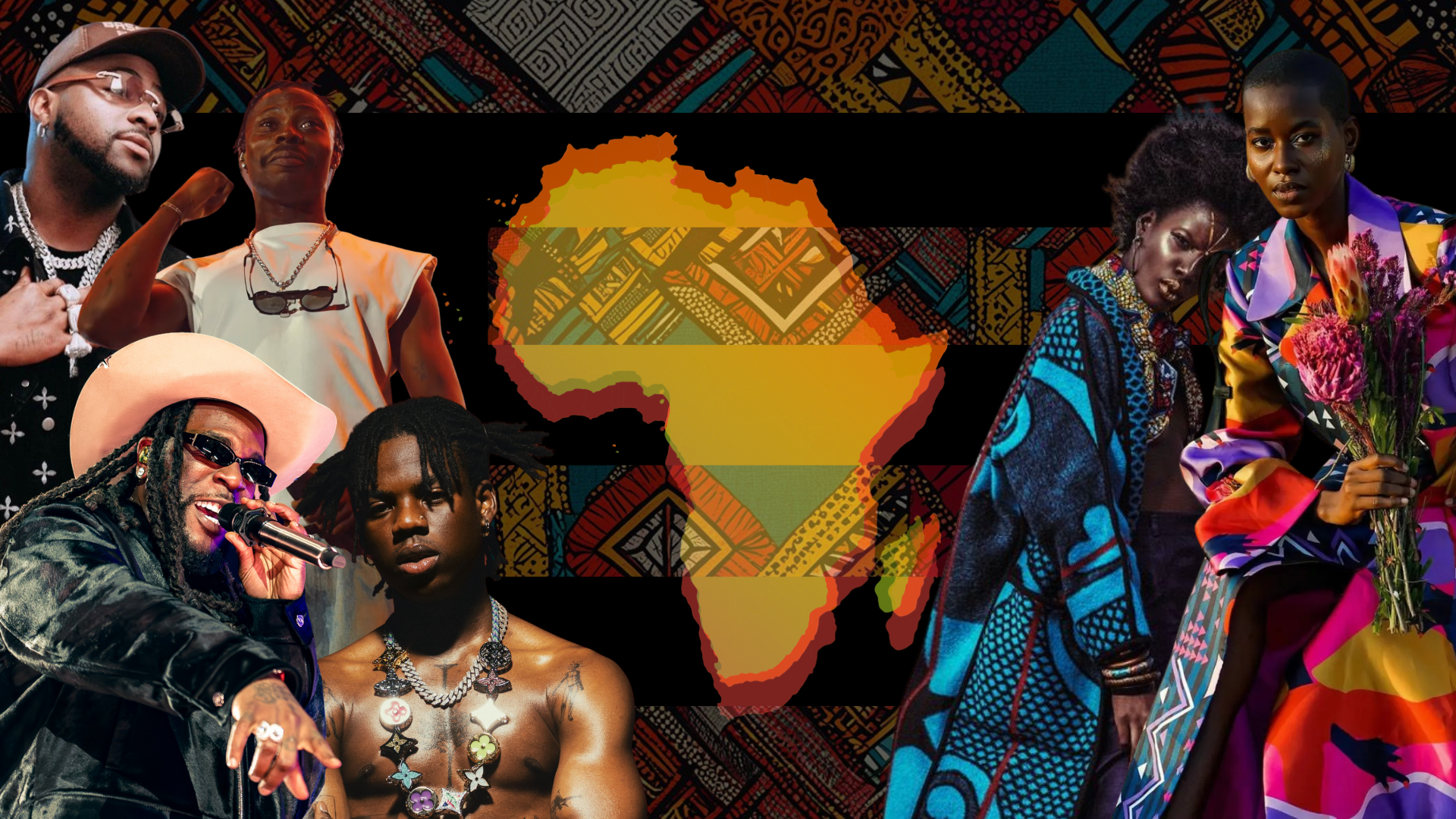
Afrobeats and Amapiano, which began as an underground sound system vibe in the streets of Accra, Lagos, and Johannesburg, is a soundscape of the world.
Artists like Burna Boy, Wizkid, and Davido are not only festival headliners in Europe and America, but they have amassed streams for their songs into the billions.
Amapiano superstars, like Uncle Waffies and Tyler ICU are also growing the sound and breaking through sonic boundaries with original, viral hits that shake TikTok timelines and Spotify charts.
Africa’s craze is not just a source of entertainment but is quickly emerging as a cultural and political force that is repositioning how Africa occupies the global imagination.
Afrobeats, in particular, is challenging the narrow lens of Western media by presenting ideas of Africa steeped in joy and creativity, while also allowing for resistance. The revolution has a nice beat.
We are headed towards a future where African fashion will no longer be labelled within the ‘ethnic’ or ‘niche’ category. Designers such as Thebe Magugu, Lisa Folawiyo, and Laduma Ngxokolo are taking over global runways of fashion by bringing together ancestral fabrics, indigenous practices, and futurist fashion.
Why is this happening now? Perhaps it is a collective renewal of cultural pride, or perhaps it is a greater global appreciation of Afrocentric design. Or maybe, it is because of the escalating roster of African-born stars who are affecting the zeitgeist.
Fashion is a form of resistance and re-appropriation. Fashion can be used to reclaim identity, and reshape a narrative. It’s time to shake off Africa’s colonial hangover.
The new African threads are not asking to be heard and seen, they are upending who and what we deem fashionable. This is shifting the entire definition of luxury through proudly African elements.
African visual arts are also enjoying a renaissance as we witness the emergence of a younger generation of digital content creators, digital curators, and cultural critiques in the harvest of culture.
African artists are now in production mode, from Nairobi to Dakar, that is energetic, complex, and unapologetic.
You only have to look at Beyoncé’s Black Is King or Marvel’s Black Panther as examples of how dominant the African visual has become to global audiences.
At another level, more conversations are being had around the repatriation of looted African art from Western institutions to African countries, reclaiming narratives and reinstating power to the people these artefacts were taken from.
Art is turning out to be potent tool for healing, truth-telling and continually building our futures.
Africa’s soft power is bubbling up, tightly wound in beats, brush strokes, and loud fashion statements. African countries continue to develop bridges globally through cultural exports, reshaping diplomacy and using a whole different space to assert influence.
International partnerships, cultural exchanges and cross-continental platforms are demonstrating to the world’s nations that African culture is not just cool, but vital, alive, existent and here to stay. It’s a movement, not a moment.
Africa’s cultural exports are deconstructing outdated narratives and creating a more sustainable and equitable world culture that represents all, not just a few.
Africa is not being defined by despair or donation, but by art, excellence and one-of-a-kind self-expression.
I’m Derrick (He/Him), a Journalism and Mass Communication graduate from the Technical University of Mombasa, Kenya. Currently I write about trending topics and major issues affecting Africa for Thred, specifically concerning SDGs. View my Twitter here if you’d like to send me feedback.
Shane Gillis’ uninspired, unfunny SNL monologue proves sexist humour is still shaping our social norms.
Forgive me for thinking that as a society we’d passed the point of giving men a platform to call women ‘whores’. Turns out we haven’t. Not only did Shane Gillis have free reign to do just that this weekend, he did so on live television, delivering an uninspired SNL monologue in which he mocked women...
The new judge is dismantling diet culture with big bites and no nonsense. We need more of this on TV, now more than ever.
I’ve always loved Nigella Lawson. I’m a fellow foodie, I’m a writer – which means I’ve devoured her written recipes as fervently as the dishes themselves – and I’m also a woman. Nigella has always represented the essence of womanhood in my eyes. She’s confident and unapologetic...
Gen Z subscribes to everything from music and films to software and storage, paying endlessly for things we never actually own. As ownership is increasingly replaced by access, are subscriptions making life more convenient - or creating a generation that pays forever and owns nothing?
There was once a revolutionary economic model called buying something.
You handed over money, gold, or whatever the currency was. Someone gave you the purchased item....
Recruiters are debating on TikTok whether it’s okay to bring iced coffee into a job interview, highlighting discrepancies in professional standards between different generations and industries.
Would you bring iced coffee into a job interview?
A debate has been underway on social media this week as Gen Zers and older professionals consider whether it’s ‘inappropriate’ or an unnecessary restriction that makes new, potential employees uneasy.
It began when TikToker @caitlinrecruiter uploaded...
We use cookies to ensure that we give you the best experience on our website. If you continue to use this site we will assume that you are happy with it.






























 0 comments